
What’s Inside a Submersible: Hydromatic Pump Training at Wood Equipment Company
A submersible pump spends its whole working life where nobody can see it. It sits at the bottom of a wet well, moving wastewater around the clock, and the first sign of trouble is usually an alarm.
That is exactly why we like taking them apart.
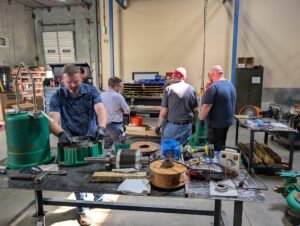
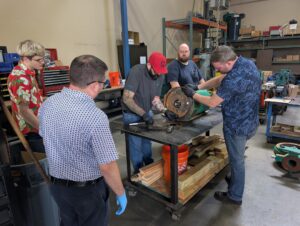
We recently set up the shop floor at our Ashland, Virginia headquarters for a hands on Hydromatic training session. A few green submersibles came off the rack, onto the hoist, and onto the benches. By the end of the day every major component was out on a table where people could hold it, measure it, and put it back together.
Nobody stood in the back. Everybody wore gloves.

Why Hydromatic
Hydromatic submersible pumps show up in lift stations, treatment plants, and commercial and industrial sumps all over the country. They are built to handle solids and run unattended for long stretches. When they are maintained well, they last. When they are not, small problems hide inside a sealed housing until they become big ones.
Understanding how these pumps are built is the difference between a planned repair and a 2 a.m. callout.
Starting at the Table
The session opened around the bench with a walkthrough of how a submersible is put together and how it fails. We covered:
How the seal system protects the motor. A submersible lives or dies by its seals. We talked through the seal arrangement, the oil chamber between the seals, and why checking that oil tells you so much about what is happening further up.
Seal leak and moisture detection. What the sensors in the pump are watching for, what the control panel does with that signal, and why a seal fail alarm should never be reset and ignored.
Heat and thermal protection. How the motor protects itself from overheating, and the operating conditions that push it there in the first place.
Solids, ragging, and wear. Modern wastewater carries a lot more than it used to. We looked at how wipes and debris affect impeller performance and why clearances matter so much on a solids handling pump.
Then the Pumps Came Apart
After that, the hoist came down and the work started. Attendees handled every step:
- Lifting the pump and breaking it down in the right order
- Draining and inspecting the seal chamber oil
- Removing the impeller and checking it for wear and damage
- Pulling the rotor and shaft and inspecting the bearings
- Removing and installing mechanical seals without damaging the faces
- Testing the motor windings with insulation resistance and high potential testers
- Reassembling the pump and understanding what to check before it goes back in the well
Worn parts sat right next to good ones, so the difference was obvious. A rusted impeller tells a story you remember a lot longer than a slide does.
Why We Keep Doing This
Wood Equipment Company has been in the pump business for over 75 years. We are an authorized Hydromatic distributor, and our technicians are factory trained on the equipment we sell and service.
Over those years we have learned something simple. The systems with the least downtime are not always the ones with the newest pumps. They are the ones run by people who understand what is inside them.
A trained operator knows what a seal fail alarm really means. A trained technician megs a motor before pulling a pump instead of after. A trained crew catches a worn impeller before it turns into a clogged lift station on a holiday weekend.
That knowledge does not show up on a purchase order. It shows up on the maintenance budget at the end of the year.
Bring Your Team In
We build training sessions around the equipment your team actually runs, here in Ashland or on site at your facility.
Who it is for: Lift station operators, wastewater and collection system crews, maintenance technicians, and facilities teams
Format: Classroom basics plus hands on teardown, typically a half day or full day
Topics we can cover: Submersible pump construction, seal systems and leak detection, motor testing, impeller and wear inspection, preventive maintenance, troubleshooting, and spare parts planning
If your crew has a few pumps nobody has opened in years, that is a great place to start.
Ask us about scheduling Hydromatic training for your team.
Wood Equipment Company 10540 Northlake Park Drive, Ashland, VA 23005 804.798.8844 sales@woodequip.com woodequip.com