

HP Series Pumps for Data Centers: Improving Refrigerant Cooling Efficiency and Reliability
As data centers continue to scale, cooling infrastructure is under more pressure than ever. Higher densities, tighter temperature tolerances, and 24/7 operation mean every component in the system has to perform reliably, efficiently, and predictably.
One area that often doesn’t get enough attention is refrigerant handling, specifically how liquid refrigerants are circulated, pressurized, and controlled within the system.
That’s where the MTH Pumps HP Series comes into play.
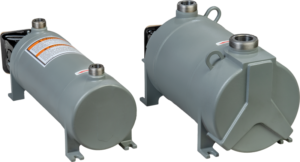
Built for Refrigerant-Based Cooling Systems
The HP Series is a hermetically sealed regenerative turbine pump designed specifically for handling liquid refrigerants like Freon, CO₂, and other non-conductive, non-corrosive fluids.
These pumps are engineered for applications where consistency, efficiency, and low maintenance are critical, making them a strong fit for modern data center cooling strategies.
Key capabilities include:
- Capacities up to 45 GPM
- Heads up to 450 feet
- Temperature handling up to 150°F
- Low NPSH requirements for stable operation
- Hermetically sealed design to eliminate leakage risk
- Inverter duty motors for precise control
In high-performance cooling systems, these features translate directly into uptime, efficiency, and long-term reliability.
Where HP Series Pumps Fit in Data Centers
While OEM system designs are often proprietary, HP Series pumps are commonly used in applications such as:
1. Liquid Pressure Amplification
Maintaining proper pressure in refrigerant systems is essential for consistent heat transfer. Regenerative turbine pumps provide smooth, controlled pressure increases without the instability seen in other pump types.
2. Economization Systems
One of the biggest opportunities for efficiency gains in data centers is economization, using ambient conditions to reduce mechanical cooling demand.
HP Series pumps allow operators to circulate refrigerant using a small motor instead of relying on large compressors when outdoor temperatures are favorable.
3. Two-Phase Cooling Systems
As data centers push toward higher efficiency, two-phase cooling systems are becoming more common. These systems rely on precise refrigerant movement and phase control, where consistent flow and pressure are critical.
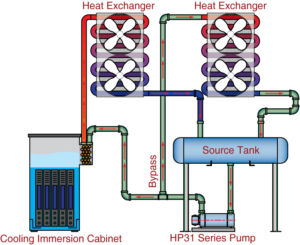
A Major Impact on Energy and Emissions
In economization applications, the impact of the HP Series can be significant.
Instead of running large compressors, facilities can use a compact pump with a much smaller motor to circulate refrigerant under the right conditions.
Real-world impact includes:
- Replacing a 15 HP compressor with a ~1.5 HP pump motor
- Reducing carbon emissions from ~11 lbs/hour to ~1 lb/hour
- Delivering substantial annual energy cost savings
Across more than 35,000 installations worldwide, this technology has helped prevent an estimated 6.5 billion pounds of carbon emissions since 2011.
For data centers balancing performance with sustainability goals, that’s a meaningful difference.
Designed for Reliability in Critical Systems
Cooling failures aren’t an option in data centers.
The hermetically sealed design of the HP Series eliminates mechanical seals, reducing the risk of leaks and minimizing maintenance requirements. Combined with low NPSH requirements and stable hydraulic performance, these pumps are built to operate continuously in demanding environments.
Why It Matters for Engineers and Operators
Specifying the right pump in refrigerant systems isn’t just about moving fluid, it’s about:
- Maintaining stable system performance
- Reducing energy consumption
- Minimizing maintenance risk
- Supporting long-term uptime
As cooling strategies evolve, especially with the rise of liquid and two-phase cooling, the role of specialized pump technology becomes even more critical.
Work with Wood Equipment Company
At Wood Equipment Company, we work with engineers, OEMs, and operators to apply the right pump technologies for demanding applications like data centers.
If you’re evaluating refrigerant-based cooling systems or looking to improve efficiency in existing infrastructure, we’re here to help.